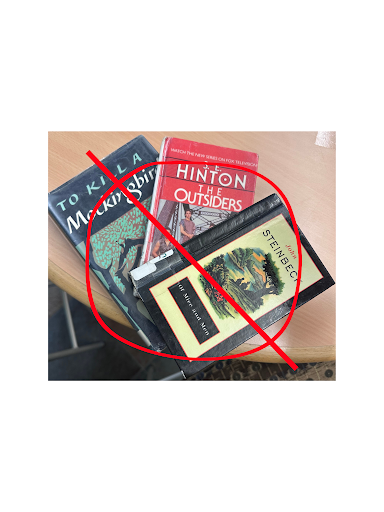
Removing books deemed “too violent” can save students from “discomfort” with the topics discussed, but it can detach the student population from things that happened in the real world many years ago.
In Michigan, around 92 percent of schools voted to remove books such as “The Outsiders,” “To Kill a Mockingbird” and “Of Mice and Men”, from being taught to students for things such as but not limited to violence, racism and murder, according to Digital Commons @UCON.
While the content in the novels can be uncomfortable, each one teaches their own lesson to students, such as empathy, social justice and necessary moral courage. These lessons aren’t often learned, especially the harsh realities of the American dream as it isn’t often grasped through history classes, as 27.7 percent of the student body understands the lesson fully through just history alone. Meanwhile, 40 percent of students comprehend these lessons and history through books better than just sitting in a lesson while it’s described to them, according to the National Assessment Governing Board.
“To Kill a Mockingbird” by Harper Lee emphasizes empathy, for example a quote from the book “Climbing into someone’s skin” suggests moral courage in the face of injustices and shows the ugly reality of racism through 1933-1935. Showing students how to look through another person’s view or better known as “standing in somebody else’s shoes” rather than just their own. “The Outsiders” by S.E Hinton concentrates on bridging out social divides, for example would be the Soc’s and the Greasers show individual connections. The soc’s stay on the west side and the Greasers stay on the east side showing their own individuality. “The Outsiders” also shows the loyalty of true friendship and the realization that no matter the social class, everyone experiences pain and struggles.
“Of Mice and Men” by John Steinbeck highlights the timeless observations of how we treat one another when things get hard in life, how quick humanity is to become cruel. The weight of moral responsibility, and the danger of dehumanizing the vulnerable demonstrates how the “survival of the fittest” mentality isn’t always the road to go down; as it can mentally destroy an entire community. While the book is read and famous for the American dream, it also teaches that hope is a survival mechanism and proves that reality can really be indifferent to people’s life plans.
Overall, banning books does more harm than good because these books teach long life lessons and ruin students’ opportunity to learn about genuine life issues and important history of the world. While some of the topics can be uncomfortable for some, the topics discussed and taught like empathy, friendship, loyalty, standing in someone else’s shoes and learning that actions have consequences is important for building character later in life.